
Renting vs. Buying in the Philippines: Updated Guide for 2025 and Beyond
Deciding whether to rent or buy in the Philippines is one of the most important choices for expats, investors, retirees, and long stay visitors. The country offers incredible opportunities — but also unique legal and financial considerations that differ from Western markets. This guide breaks down the real world pros and cons, updated laws, and the smartest way to test an area before committing long term.
1/2/20262 min read

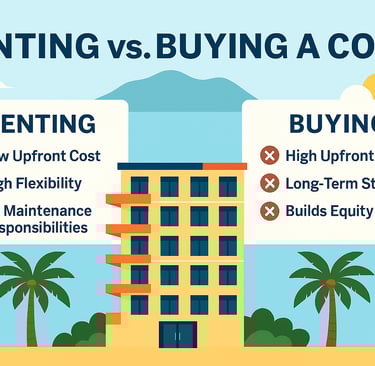
🏡 Renting in the Philippines
Renting remains the most flexible and low‑risk way to live in the Philippines, especially if you’re new to the country.
✔️ Advantages of Renting
Low upfront cost — usually 1–2 months’ deposit + 1 month advance
High flexibility — ideal if you’re exploring different cities or islands
No maintenance responsibilities — landlords handle repairs
Furnished units are common — especially in condos and tourist areas
❌ Disadvantages of Renting
No equity or long‑term financial return
Rent may increase annually
Limited ability to renovate or customize
Typical Rental Prices (2025)
Metro Manila studios: ₱15,000–₱30,000/month
Makati/BGC premium units: ₱50,000+
Provincial condos: ₱10,000–₱20,000/month
🏠 Buying Property in the Philippines
Buying offers stability and long‑term investment potential — but comes with legal and financial rules that foreigners must understand.
✔️ Advantages of Buying
Long‑term stability and control
Builds equity and potential appreciation
Freedom to renovate and customize
Strong rental demand in key cities and tourist areas
❌ Disadvantages of Buying
High upfront cost (10–20% downpayment + taxes + fees)
Maintenance and repairs are your responsibility
Foreigners cannot own land — only condos or long‑term leases
📌 Updated Law: Foreigners Can Now Lease Land for Up to 99 Years
A major update in 2025 expanded foreign land leases:
Foreigners can now lease private land for up to 99 years
This replaces the old 50 years + 25‑year extension (75 years)
Applies to investment‑qualified projects, tourism developments, and long‑term residential arrangements structured under the new framework
This is a significant improvement for foreigners who want long‑term stability without owning land.
Important:
Ordinary residential leases (non‑investment) still typically range from 1–5 years, or 25–50 years for long‑term land leases outside the investment program.
🌴 Why You Should Rent First Before Buying
Even if you plan to buy eventually, renting first is the smartest move — especially in the Philippines, where neighborhoods can vary dramatically in:
Traffic
Noise levels
Flooding
Building management
Internet quality
Local conveniences
Safety and walkability
Most experienced expats recommend living in an area for 1–3 months before making a long‑term decision.
🛏️ Try an Airbnb Stay to Experience the Area First
If you want a comfortable, well‑managed place to stay while exploring the Philippines, start with this Airbnb:
👉 Ocean Breeze by RA Property Group
https://airbnb.com/h/rapropertygroupOceanBreeze
It’s a perfect way to experience the lifestyle, amenities, and environment before committing to a long‑term rental or purchase.
🤝 Need Help Navigating Philippine Real Estate?
Whether you're comparing neighborhoods, evaluating condo projects, or exploring long‑term leasing options (including the new 99‑year framework), we can help you understand the process and make a confident, informed decision.
Just tell us what areas or property types you’re considering, and we’ll guide you step‑by‑step.
RA Property Group specializes in cross-border property management and advisory. We help foreign investors navigate ownership rules, due diligence, and operational oversight with clarity and confidence.
Live boldly. Make the nontraditional, traditional.
Book a consultation today and let’s explore what’s possible.
Contact
Questions? Reach out anytime.
Phone
info@RAPropertyGroup.com
+1-555-123-4567
© 2025. All rights reserved.